

Three Parenting Mistakes That Can Lead to Spoiled Behavior | Collaborative for Children
×
User Search
Give
Give Newsletter Signup
4/28/2026

Three Common Parenting Mistakes That Can Lead to Spoiled Behavior and What to Do Instead

Articles Media

Raising young children means walking a constant line between being responsive and letting kids learn through experience. Most parents are not worried about their child being “spoiled” in the traditional sense. What they worry about is raising a child who struggles with patience, problem solving, and emotional regulation. Those skills are built early, both at home and in high-quality early childhood education settings.

At Collaborative for Children, we work with families and early educators every day who are trying to do the right thing. We also see a few common patterns that can unintentionally work against a child’s long-term development. The good news is these are fixable, and they often start with small mindset shifts rather than big changes.

This article focuses on three well-documented parenting mistakes that can reinforce spoiled behavior and how calm, consistent guidance helps children build self-control and consistency.
Fixing problems too quickly limits a child’s ability to cope

When a child is uncomfortable, bored, or frustrated, it is natural to want to jump in and make it better. Hungry? Grab a snack immediately. Bored? Hand them a toy or a tablet. Struggling? Fix it for them. While this comes from a place of care, research shows that children need opportunities to tolerate small amounts of frustration to build self-regulation skills.

The Harvard Center on the Developing Child explains that executive function skills like impulse control and flexible thinking develop through practice, not protection. When children are always rescued from mild discomfort, they miss chances to learn how to wait, problem solve or calm themselves down. These skills are foundational to success in school and in life.

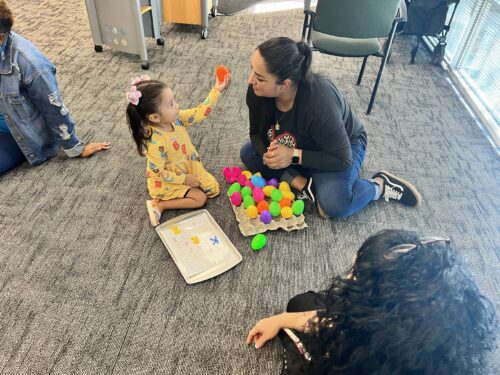
In high-quality early learning environments, like Collaborative for Children’s Centers of Excellence, teachers intentionally allow children time to work through age-appropriate challenges. A child may struggle to complete a puzzle or wait their turn during a STEAM activity. Educators stay nearby, offering support without taking over. Parents can mirror this at home by pausing before fixing, acknowledging the feeling, and giving children space to try.

Inconsistent limits confuse children and invite more pushbacks

One day the answer is no. The next day, because you are tired or stressed, the answer becomes yes. This inconsistency is incredibly common, and it is also deeply confusing for young children.

Consistent boundaries help children feel secure. When limits change unpredictably, children are more likely to test rules, not because they are being difficult, but because they are trying to understand where the real boundary is.

In early childhood classrooms aligned with best practices from state Departments of Education, consistency is nonnegotiable. Expectations are clear, predictable, and reinforced calmly. At home, this might look like agreeing on key rules in advance and sticking to them even when emotions are high. Children thrive when they know what to expect.

Saying yes to stop big emotions teaches the wrong lesson

Few things are harder than watching your child cry, yell, or melt down in public or at home. In those moments, it can feel easier to say yes just to make the emotion stop. But changing your answer in response to a tantrum teaches a powerful lesson.

The Child Mind Institute explains that when children learn big emotional reactions lead to getting what they want, those reactions tend to grow stronger over time. This is not manipulation. It is learning through experience.

Supporting emotional development does not mean giving in. It means holding the limit while helping the child regulate. In practice, this may sound like, “I know you’re upset. It’s okay to feel that way. The answer is still no.” Over time, children learn that feelings are allowed, but limits remain steady.

What this looks like in real life in Houston families

One parent working with a Collaborative for Children Family Engagement specialist shared this reflection: “I thought I was being kind by stepping in right away. Once I learned to pause and stay consistent, my child became calmer and more confident. The tantrums didn’t disappear overnight, but they stopped escalating.”

This aligns with what we see across Greater Houston in Family Engagement programs and certified child care Centers of Excellence. Children who experience consistent expectations at home and in early learning settings show stronger self-regulation, better peer relationships, and more persistence during learning activities.

How Collaborative for Children supports healthy behavior development

Collaborative for Children partners with parents, educators, and child care programs across Houston to build strong foundations early. Through professional development, family resources, and our Centers of Excellence framework, we focus on social-emotional learning as much as academic readiness.

We emphasize play-based learning, STEAM exploration, and intentional routines that teach children how to wait, try again, and manage big feelings. These practices differentiate high-quality early childhood education from basic drop-in daycare and align with guidance from state and federal education agencies.

.

Instilling Self-Control in Children

Frequently Asked Questions

Does letting children get frustrated harm them?

No. Short, manageable frustration helps children build coping and problem-solving skills when supported by calm adults.

Aren’t tantrums normal in early childhood?

Yes. Tantrums are a normal part of development, but how adults respond influences how often and how intensely they occur.

How do child care centers help prevent spoiled behavior?

High-quality centers use consistent routines, clear limits, and supportive guidance to teach self-control and perseverance through everyday experiences.

Related News