

Signs of a Gifted Child in Early Childhood | Collaborative for Children Houston
×
User Search
Give
Give Newsletter Signup
6/29/2026

Super Smart Children Often Show These 4 Signs

Articles Media

If your child talks nonstop, climbs everything in sight, skips naps, and can’t sit still at the table, it can feel overwhelming. Many parents wonder if something is wrong. More often, it is a sign that something is very right.

At Collaborative for Children, we hear this question all the time across Greater Houston. Families want to know if these behaviors point to strong intelligence or even giftedness. The truth is a little more nuanced. There is no single checklist that proves a child is a genius. But research does show that many highly capable children share patterns of behavior tied to curiosity, energy, and how their brains process information.

Let’s walk through the four common signs and what they really mean for your child’s development.
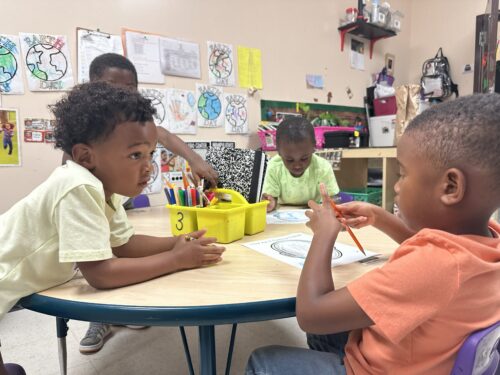
Nonstop Talking Often Signals Active Thinking

Children who constantly ask questions are not just being chatty. They are building connections in real time.

Research shows that gifted children tend to have strong verbal working memory and advanced information processing skills, which supports early language development and complex questioning.

That endless stream of “why” and “how” questions can feel exhausting, especially at the end of a long day. But it is one of the clearest indicators of curiosity, and curiosity drives learning more than almost anything else in early childhood.

In high-quality early learning environments like our Centers of Excellence, educators are trained to engage with that curiosity rather than shut it down. A teacher might turn a child’s question into a hands-on activity or group discussion, helping them learn how to explore ideas in deeper ways.

Constant Movement Reflects Brain-Body Development

Running, climbing, jumping from one activity to the next can look like restlessness. It is often how young children learn best.

Highly curious and capable children often show high levels of energy and exploration as they interact with their environment.

Movement helps the brain grow. When children use their bodies, they strengthen coordination, spatial awareness, and problem-solving skills. This is why play-based, STEAM-focused learning matters so much. Building towers, experimenting with water, or exploring outdoor spaces all support cognitive development.

In our Houston area Centers of Excellence, classrooms are designed for movement. Children are not expected to sit still for long stretches because that is not how early learning works. Instead, they rotate through hands-on activities that connect physical movement with thinking and discovery.

This is one of the biggest differences between a true early education program and a basic drop-in daycare.

What Neurodiversity Affirming Early Childhood Education Looks Like in Practice

Skipping Naps Can Reflect Brain Maturity, Not Defiance

When a child suddenly resists naps, it can feel like a daily battle. But science offers an important perspective.

Emerging research shows that naps play a key role in memory processing in younger children, especially when parts of the brain like the hippocampus are still developing.

As children grow, their brains begin to hold and organize information for longer periods, reducing the need for daytime sleep. In some cases, a child who struggles to nap may simply have a brain that is transitioning to the next stage of development.

That said, every child still needs rest. Quiet time remains important, even if sleep does not happen.

Educators in our programs often replace traditional nap expectations with flexible rest periods, allowing children to read, draw, or engage in calm activities. This approach respects developmental differences while still supporting healthy routines.

Struggling to Sit Still Often Points to Curiosity

If mealtimes feel like a constant struggle, you are not alone. Many young children have a hard time sitting still, especially those who are deeply curious.

Curiosity is strongly linked to intrinsic motivation and openness to experience, both of which are higher in children with advanced cognitive abilities.

A child who is looking around, asking questions, and fidgeting is not necessarily being difficult. They are trying to take in everything around them.

This is why rigid expectations can backfire. Instead of forcing stillness, it helps to create structured but flexible environments where children can explore safely and appropriately.

At Collaborative for Children, we coach educators and families to channel this curiosity into meaningful learning moments. Simple strategies like involving children in conversations, giving them small responsibilities, or turning everyday routines into learning opportunities can make a big difference.

What These Signs Really Mean for Parents

Seeing three or even all four of these signs does not automatically mean your child is a genius. It does mean your child may need a more engaging, responsive learning environment.

The biggest risk is not these behaviors themselves. It is misunderstanding them.

Children who are highly curious and energetic can become frustrated in environments that expect them to sit quietly, follow rigid routines, or limit exploration. Over time, that mismatch can affect confidence and motivation.

On the other hand, when these children are supported with the right tools, trained educators, and play-based learning experiences, they thrive.

That is why Collaborative for Children focuses on quality. Our Centers of Excellence meet higher standards for early childhood education, including educator training, curriculum design, and classroom environments that support the full range of child development.

Understanding Learning Styles to Enrich a Child’s Education

How Parents in Greater Houston Can Support Their Child at Home

You do not need a perfect plan. Small, consistent actions make the biggest impact.

Start by listening and engaging with your child’s questions, even when you do not have all the answers. Encourage movement through play, especially outdoors. Offer quiet time instead of forcing naps. And create simple routines that allow for both structure and flexibility.

Most importantly, choose early learning environments that see your child’s behavior as potential, not a problem.

How to Build Intrinsic Motivation in Young Children

FAQs

Are these behaviors signs of ADHD or giftedness?

They can be either, depending on the child and the context. A professional evaluation is the only way to determine this accurately, but many of these behaviors overlap with both curiosity-driven learning and attention challenges.

Should I be worried if my child does not nap anymore?

Not necessarily. Some children naturally outgrow naps as their brain develops, but they still need quiet rest time during the day.

How do I know if a child care center will support my child’s needs?

Look for programs with trained educators, structured but flexible routines, and a focus on hands-on, play-based learning such as those recognized as Centers of Excellence.

Related News