

Neurodiversity Affirming Early Childhood Education in Houston
×
User Search
Give
Give Newsletter Signup
3/24/2026

What Neurodiversity Affirming Early Childhood Education Looks Like in Practice

Articles Media

Early childhood classrooms are changing, and for good reason. Families, educators, and researchers are recognizing something many parents have always known.  Children do not learn, play, or communicate in the same way. Neurodiversity‑affirming early childhood education moves beyond labels and checklists to focus on how children experience the world and how learning environments can adapt to support them.

At Collaborative for Children, we see neurodiversity‑affirming practice not as a trend, but as a responsibility. In Greater Houston, where families are diverse in language, culture, and lived experience, early learning environments must be flexible, inclusive, and rooted in child development science.
Neurodiversity‑Affirming Education Supports Whole Child Development

Neurodiversity is the idea that differences in how brains work are a natural part of human variation. This includes children who are autistic, have ADHD, speech or sensory differences, or develop at a different pace. Leading institutions such as the Centers for Disease Control and Prevention and the U.S. Department of Health and Human Services emphasize that early environments should support individual development while promoting belonging and participation for all children.

In practice, neurodiversity‑affirming classrooms focus on strengths instead of deficits. Educators observe how a child engages with materials, peers, and routines, then adjust the environment to reduce barriers. This might look like offering quiet spaces for regulation, flexible seating, visual schedules, or hands‑on materials that support different learning styles. These approaches benefit every child, not just those with identified needs.

Research consistently shows that inclusive early learning environments support stronger social skills, emotional regulation, and long‑term academic outcomes for children with and without disabilities.

Understanding Learning Styles to Enrich a Child’s Education

Play‑Based Learning Creates Space for Different Ways of Learning

Young children make sense of the world through play. Neurodiversity‑affirming classrooms protect time for exploration, movement, and imagination rather than pushing rigid academic expectations too early. Hands‑on, play‑based learning allows children to communicate and demonstrate understanding in many ways.

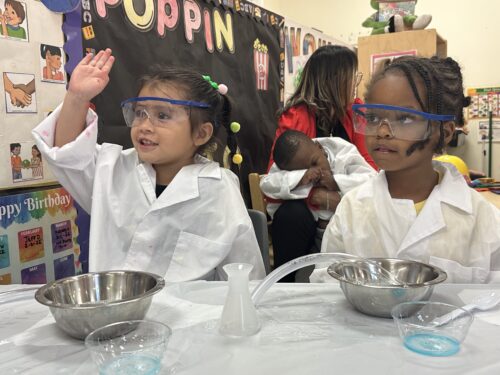
Collaborative for Children’s Centers of Excellence emphasize STEAM‑aligned, play‑based curriculum that encourages curiosity and problem‑solving. When children build with blocks, experiment with water, or explore cause and effect, educators can observe learning without forcing one “right” way to participate. This approach supports language development, motor skills, and executive function across a wide range of developmental profiles.

According to the CDC, one in six children has a developmental difference, making flexible, responsive environments essential rather than optional.

Educator Training Makes Inclusion Sustainable

Neurodiversity‑affirming education does not happen by accident. It requires ongoing training, coaching, and reflection. Educators need support to understand child development, adapt instruction, and partner with families in meaningful ways.

Collaborative for Children provides certified early childhood education training that equips educators with practical strategies they can use immediately. Our professional development focuses on observation, responsive teaching, and developmentally appropriate practice rather than compliance‑based models. This helps child care providers move beyond one‑size‑fits‑all instruction.

“High‑quality early learning means meeting children where they are,” says a Collaborative for Children coach. “When educators feel confident adapting the environment instead of trying to change the child, classrooms become calmer, more joyful, and more effective.”

“High quality early learning means meeting children where they are,” says a Collaborative for Children coach. “When educators feel confident adapting the environment instead of trying to change the child, classrooms become calmer, more joyful, and more effective.”

Family Partnerships Extend Learning Beyond the Classroom

Neurodiversity‑affirming education does not stop at the classroom door. Families play a central role in early childhood development, especially in the first five years. Parents and caregivers benefit from clear, respectful communication about their child’s strengths, interests, and needs.

Collaborative for Children supports early childhood education at home by sharing developmentally appropriate activities families can use in everyday routines. Simple strategies such as shared reading, sensory play, and open‑ended questions help reinforce learning while strengthening relationships.

Quality Child Care Is Different from Drop‑In Care

Neurodiversity‑affirming practice highlights an important distinction for families. High‑quality early education is not the same as drop‑in daycare. Certified child care Centers of Excellence invest in trained educators, curriculum planning, and individualized support.

Collaborative for Children works with early learning programs across Houston to raise quality standards through coaching, assessment, and continuous improvement. Our Centers of Excellence are designed to support long‑term development, school readiness, and family engagement rather than short‑term supervision.

When families choose quality early learning, children benefit from consistent relationships, intentional environments, and educators who understand how development unfolds over time.

FAQs

What is neurodiversity‑affirming early childhood education?

Neurodiversity‑affirming early childhood education recognizes that children learn and develop in different ways and adapts the environment to support those differences rather than trying to change the child.

How does play‑based learning support neurodiverse children?

Play‑based learning allows children to explore, communicate, and problem‑solve using their strengths, making learning accessible and meaningful for a wide range of developmental styles.

How can parents support neurodiversity‑affirming learning at home?

Parents can support learning by following their child’s interests, offering hands‑on activities, and partnering with educators to create consistent routines and expectations.


Related News