

Centers of Excellence in Greater Houston: Coaching, STEAM, and Family Engagement for School Readiness
×
User Search
Give
Give Newsletter Signup
12/10/2025

Building a Culturally Competent Early Learning Ecosystem in Greater Houston

Articles Media

Collaborative for Children Builds an Ecosystem that Improves School Readiness

For more than three decades, Collaborative for Children has invested in a comprehensive support system for early learners across Houston and the 13-county Greater Houston area. Our Centers of Excellence certify child care programs, provide business coaching to owners, deliver certified ECE training to teachers, and empower parents to bring learning home. This multi-generation approach focuses on quality, equity, and measurable school readiness outcomes.

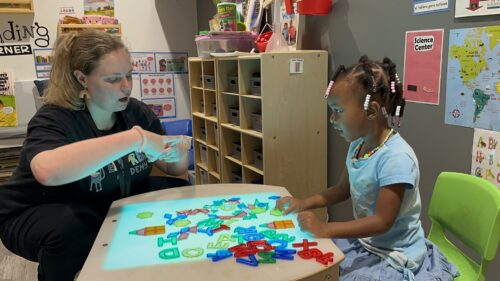
Since 2021, our Collab-Lab mobile classroom has directly reached more than 8,000 children, expanding access to hands-on, play-based STEAM and literacy experiences in historically underserved neighborhoods. Across our growing ecosystem of 125 child care centers, our coaches visit every other week to strengthen teacher practice, align curricula to developmental benchmarks, and ensure culturally competent home-school connections that engage families in their child’s learning.
School Readiness Requires Families, Educators, and Schools to Work Together

School readiness means children are ready for school, families are ready to support learning, and schools are ready for children. National guidance from Head Start emphasizes a whole-child approach grounded in physical, cognitive, social, and emotional development, and a Parent, Family, and Community Engagement (PFCE) framework to sustain gains through third grade. At the federal level, the U.S. Department of Education’s Early Learning team encourages districts to braid Title I and IDEA funds to expand access to high-quality preschool and strengthen transitions to kindergarten, especially for dual language learners and children with disabilities.

Texas Aligns Pre-K Guidelines to Kindergarten Readiness

Texas has updated its Prekindergarten Guidelines to better align with kindergarten standards and to support multilingual learners and special populations. This guidance helps educators design developmentally appropriate, play-rich experiences that build foundational literacy and math skills. Recent statewide dashboards and briefs show why early learning remains urgent in Greater Houston: kindergarten readiness rates across Texas hover near half, and third-grade literacy and math performance highlights the importance of high-quality pre-K and child care.

Why Coaching and Certified Training Matter in Early Childhood Classrooms

High-quality, job-embedded coaching helps teachers implement evidence-based practices with fidelity and sustain improvements over time. Research and national technical assistance centers point to practice-based coaching as a promising strategy to improve teacher-child interactions and child outcomes. Professional associations such as NAEYC underscore that coaching is relationship-based, cyclical, and focused on goal setting, observation, reflection, and feedback—making change stick in real classrooms.

Collaborative for Children Delivers Certified ECE Training and Biweekly Coaching

Our Centers of Excellence provide certified early childhood training, curriculum support, and biweekly instructional coaching that translate theory into daily practice. This includes tools for data-informed observation, guidance on Texas Pre-K guidelines implementation, and culturally responsive strategies for engaging families at home. We also support directors with business development so centers can sustain quality improvements, from staffing and professional learning communities to health and safety compliance, while differentiating from drop‑in daycare that lacks robust instructional models.

STEAM and Hands-On Play Build Executive Function and School Readiness

Play-based learning and STEAM experiences build executive function skills like working memory, self-control, and cognitive flexibility which are foundational for reading, math, and problem-solving. Harvard’s Center on the Developing Child and related resources show that playful interactions and age-appropriate activities strengthen brain architecture and lifelong learning skills. Recent guides and research briefs offer practical strategies for integrating STEAM in early childhood, emphasizing inquiry, observation, measurement, and creative expression, exactly the kind of hands-on work we bring to classrooms and homes.

Download the I Wonder Parenting Handbook

Real-World Application in Greater Houston

In our Centers of Excellence, teachers integrate STEAM through child-led investigations, gardens, water play, and makerspace challenges, supported by coaching that scaffolds vocabulary, data collection, and reflection. Such projects align with national models for inclusive, inquiry-based STEAM and prepare children for more complex concepts in elementary grades.

Family Engagement Creates a Strong Home-School Connection

Family engagement amplifies school readiness by aligning home routines with classroom goals. The PFCE research-to-practice series and national guides highlight concrete strategies that programs can use to partner with families for reading, language, and social-emotional growth.

Donate Now

Collaborative for Children Supports Parents at Home

We provide resources and coaching to parents who want to support their children’s learning at home. Our family engagement practices invite parents to set goals, use simple play-based activities, and celebrate progress, strengthening the culturally competent home-school connection across Houston neighborhoods.

Case Study: Turning a Center into a Center of Excellence

A Houston center joined our Centers of Excellence after seeking help with teacher turnover and uneven classroom quality. Within months, the director engaged in our business support track, teachers completed certified ECE modules, and a master coach visited biweekly to model interactions and plan STEAM investigations. Children showed stronger attention and language during hands-on projects, and families began using home activity guides tied to classroom themes. This mirrors the evidence base on coaching and family engagement, which links job-embedded support and home-school alignment to better child outcomes.

Learn More about centers of excellence

How Collaborative for Children Differs from Drop‑In Daycare

Our Centers of Excellence certify high standards in education, safety, and family engagement, prioritizing long-term child development over short-term supervision. The program layers certified teacher training, biweekly coaching, data tracking, play-based STEAM, and parent resources to drive school readiness. Drop-in facilities typically lack sustained instructional coaching, certified curricula, and family engagement frameworks—components that research associates with higher-quality interactions and stronger child outcomes.

Key Takeaways and Action Steps for Houston Families and Providers

  • Parents bring early childhood education into the home by using simple, playful routines that strengthen attention, language, and self-control.
  • Teachers grow practice through biweekly coaching that makes theory actionable and supports fidelity to evidence-based strategies.
  • Directors sustain quality by engaging in business coaching and professional learning communities, supported by county and state initiatives.
  • Policymakers and partners leverage federal and state guidance to expand access, improve quality, and align systems for school readiness.

Frequently Asked Questions

What is a Center of Excellence?

A Center of Excellence is a certified child care program that meets high standards for education quality, safety, and family engagement, supported by coaching and data-informed practices to improve school readiness.

How does Collaborative for Children support learning at home?

We provide parents with age-appropriate, play-based activities and goal-setting tools so families can reinforce classroom learning with culturally responsive practices at home.

Why prioritize STEAM in early childhood?

STEAM builds executive function and problem-solving through hands-on inquiry, which boosts readiness for reading, math, and collaboration in elementary school and beyond.

Related News