

Positive Traits of ADHD in Children | Strength-Based Early Learning in Houston
×
User Search
Give
Give Newsletter Signup
3/16/2026

Reframing ADHD In Early Childhood

Articles Media

A Different Way to Talk About ADHD

The other day, someone commented on a post and said, “I’ve never seen anyone talk about being positive about ADHD before.” That response stuck with us. Not because ADHD is easy, but because the conversation around it is often incomplete.

At Collaborative for Children, we work alongside families, educators, and child care providers across Houston and Greater Houston every day. Many of the children we serve are neurodivergent. They are curious, energetic, deeply feeling, and wildly creative. And while ADHD absolutely comes with real challenges, it also comes with real strengths that deserve to be recognized, especially in the early years.

This is not about toxic positivity. Hard things are still hard. But when we only focus on what children struggle with, we miss what they bring.
Why Strength-Based Thinking Matters in Early Childhood

Early childhood is when children form their first beliefs about who they are as learners. When a child hears mostly corrections, redirection, or labels, they start to internalize the idea that something is “wrong” with them.

Strength-based early learning flips that script. It asks a different question. Instead of “How do we fix this child?” we ask, “What is this child showing us about how they learn?”

High-quality early childhood education, especially in certified Centers of Excellence, is designed to notice those signals early. Through play-based learning, STEAM activities, and trained educators, children are given space to move, explore, ask questions, and engage in ways that match how their brains work.

What ADHD Strengths Often Look Like in Young Children

ADHD does not show up the same way in every child, but certain patterns appear again and again in early learning environments when children are supported instead of suppressed.

Creativity and original thinking
Many children with ADHD generate ideas quickly and make unexpected connections. During hands-on STEAM activities, they often approach materials differently, experimenting, building, and problem-solving in ways that surprise adults and peers.

High energy and enthusiasm
That constant motion is often described as a problem, but in the right setting it becomes momentum. Children with ADHD often bring excitement to group activities and can lift the emotional energy of a classroom when movement is built into learning.

Deep focus when interest is sparked
ADHD is not a lack of attention. It is attention that is interest-driven. When a child is engaged, whether it’s building a tower, acting out a story, or exploring a science experiment, their focus can be intense and sustained.

Empathy and emotional awareness
Many children with ADHD are highly sensitive to the emotions of others. They notice shifts in mood, tone, and energy. With guidance, this sensitivity becomes empathy, leadership, and strong peer relationships.

Playfulness and humor
ADHD brains often find joy in unexpected places. These children tend to be playful, imaginative, and funny. In early childhood classrooms, humor supports language development, social connection, and creativity when it is welcomed rather than shut down.

Early Childhood Brain Development Shapes Lifelong Learning

Why Play-Based Learning Supports Neurodivergent Children

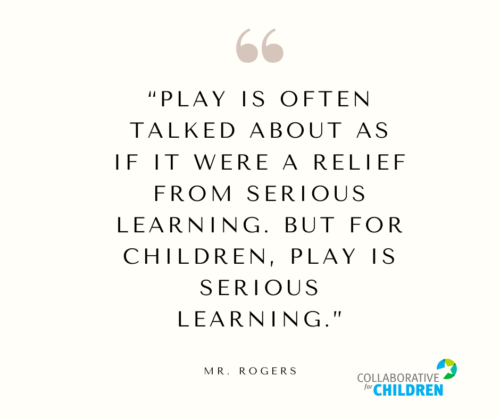
Play is not the opposite of learning. It is how young children learn best.

In Centers of Excellence across Greater Houston, play-based curriculum allows children with ADHD to move their bodies, test ideas, collaborate with peers, and practice self-regulation in real time. STEAM activities add structure without rigidity, giving children goals while honoring curiosity.

This approach is fundamentally different from drop-in daycare environments that prioritize supervision over development. High-quality early childhood education recognizes that children are not meant to sit still for long periods. They are meant to explore.

What This Means for Parents at Home

Parents are often the first to notice both the challenges and the strengths of ADHD. At home, strength-based support can look like:

  • Naming what your child does well out loud, not just what needs improvement
  • Offering hands-on activities that invite curiosity and movement
  • Creating routines that are visual, flexible, and predictable
  • Remembering that behavior is communication, not defiance

When parents and educators use the same language around strengths, children feel understood instead of managed.

Creating Inclusive Child Care Spaces for Neurodivergent Kids

What This Means for Educators and Child Care Providers

Educators shape how children see themselves as learners. In early childhood classrooms, this means:

  • Designing lessons that include movement, choice, and hands-on exploration
  • Using curiosity as an entry point for literacy and math
  • Coaching children through regulation instead of punishing dysregulation
  • Partnering with families to understand each child’s unique learning profile

Collaborative for Children supports this work through certified ECE training, ongoing coaching, and our Centers of Excellence framework, helping providers move beyond compliance and toward truly inclusive practice.

Building a Culturally Competent Early Learning Ecosystem in Greater Houston

A Strengths-First Future for Houston’s Children

Children with ADHD are not broken. Many are simply mismatched with environments that were not designed for how they learn.

When we build early learning spaces that value play, movement, creativity, and emotional development, children thrive. That is why Collaborative for Children continues to invest in high-quality early childhood education across Greater Houston.

Because when we see children clearly, we can teach them better.

FAQs

Is it okay to talk about ADHD in a positive way?
Yes. Talking about strengths alongside challenges helps children build confidence and a healthy self-image while still acknowledging areas where they need support.

Does play-based learning really help children with ADHD?
Yes. Play-based, hands-on learning supports attention, regulation, and engagement by aligning with how young children naturally learn.

How are Centers of Excellence different from daycare?
Centers of Excellence focus on early childhood education, certified teacher training, STEAM curriculum, and family engagement, not just supervision.

Related News