

Valentine’s Day Crafts That Build Early Learning Skills | Collaborative for Children
×
User Search
Give
Give Newsletter Signup
2/12/2026

How Valentine’s Day Crafts Help Young Children Build Skills at Home and In the Classroom

Articles Media

Valentine’s Day offers a simple invitation for young children to get creative, connect with others, and practice skills that matter for early learning. Parents often think of this holiday as a time for cards and candy, but for young children, it can be a powerful opportunity to learn through hands‑on play. At Collaborative for Children, we help families and child care professionals use everyday moments like holidays to encourage growth in social skills, language development, creativity, and fine motor strength.

Crafting is one of the easiest ways to achieve that. Many Valentine projects use materials families already have at home and can be adapted for toddlers to early elementary age. Parents and early childhood educators can rely on simple, accessible craft ideas to bring learning to life. Even basic activities like making tissue paper sun‑catchers or birdseed valentines help strengthen fine motor control and problem‑solving skills while keeping the experience fun and low‑stress.

To help you get started, we pulled insights from trusted craft resources, then combined them with best practices from our Centers of Excellence and STEAM‑based learning model used across Greater Houston. This article shows how Valentine’s Day crafts support development, what young children learn through creative work, and how parents and educators can bring these ideas into daily routines.
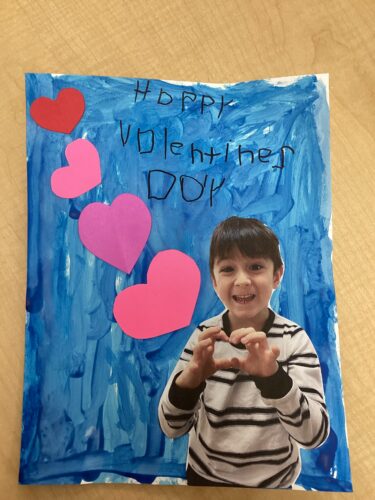
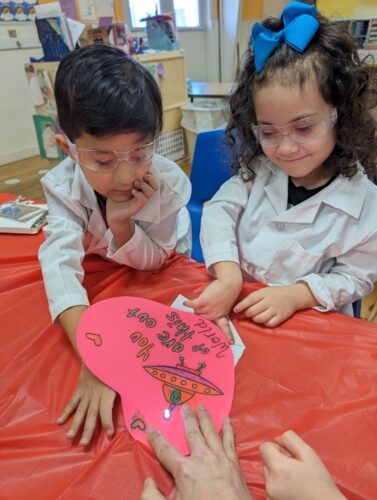
Why Valentine’s Day Crafts Help Children Learn

Hands‑on activities promote early learning because children use their senses, make decisions, and work toward a visible goal. Research on child development consistently shows that making things helps kids understand shapes, colors, patterns, sequencing, and early math concepts. Some Valentine crafts, like rainbow heart sun‑catchers, help children explore color mixing while practicing scissor skills and hand‑eye coordination.

Other projects allow children to explore empathy and kindness. For example, preschool teachers often combine Valentine crafts with conversations about friendship, sharing, and giving. As one early childhood educator noted, Valentine’s Day conversations around love and friendship help kids build emotional awareness while learning that their creative work can brighten someone else’s day.

At Collaborative for Children, we view these experiences as the foundation of social‑emotional learning. Children learn that creating something with their hands carries meaning. They also feel pride in finishing a project, which supports confidence and resilience in learning new skills.

How Parents Can Use Valentine Crafts to Support Learning at Home

Parents often wonder how to bring “real learning” into the home without adding pressure or complicated routines. The truth is that crafts make it easy. They feel natural to children and don’t require expensive supplies. A simple heart collage or a paper-cutting activity can reinforce colors, shapes, textures, and early literacy skills when adults talk through the process.

Families can start small. Choose one or two projects that match your child’s interests and attention span. Many toddler‑friendly ideas, like paper heart mosaics or “love bug” characters, require little more than paper, glue, and imagination. These activities can offer the same fine motor benefits as more advanced crafts but are less overwhelming for young learners. According to our Early Childhood Specialists, tasks like cutting small paper pieces or gluing shapes help prepare young children for writing by strengthening hand muscles and improving control.

How Educators and Child Care Providers Can Integrate Valentine Crafts into Early Childhood Classrooms

In early learning classrooms, Valentine’s Day crafts can support structured lessons and open‑ended exploration. Certified early childhood educators can use craft stations to introduce STEAM concepts, such as color theory, balance, and design. For example, yarn‑wrapped heart crafts help children understand tension and shape while exercising patience and sequencing. Several craft resources note that simple projects like yarn‑wrapped paper hearts are easy for children to complete and offer clear visual results, which encourages persistence.

Providers in our Centers of Excellence tell us that children respond best when they can take ownership of their projects. Offering choices, such as selecting materials or deciding how to decorate, strengthens decision‑making skills. It also helps educators observe developmental progress in real time, which supports high‑quality assessment and child‑centered planning.

When classrooms take a play‑based approach, crafts become a natural way to connect curriculum goals with personal expression. Educators can introduce vocabulary around shapes, textures, and emotions while supporting creativity. This balanced approach aligns with guidance from the Department of Education, which encourages early learning environments to connect play to cognitive growth and social development.

Collaborative for Children Empowers Families to Build Reading Readiness at Home

What Makes Collaborative for Children A Trusted Resource

Families and providers across Greater Houston rely on us because we bring evidence‑based practices into real‑world settings. Parents want practical ideas, not complicated theories. Child care providers want trainings and curricula that fit the needs of diverse learners. Our organization blends both.

Our Centers of Excellence model sets a high bar for instructional quality and hands‑on learning. We help teachers incorporate STEAM activities, child‑led exploration, and developmentally appropriate crafts into their programs.

Most importantly, we are committed to helping every child in Greater Houston enter kindergarten with the skills needed to thrive. When children engage in meaningful creative work, such as Valentine’s Day crafts, they practice skills that translate far beyond the art table.

Resources for Educators


Recommended Valentine Craft Ideas for Parents And Educators

If you want simple, age‑appropriate project ideas, here are a few supported by our research:

Rainbow Heart Sun‑catchers

Great for color recognition and fine motor skills. Children layer tissue paper squares onto adhesive surfaces to create a colorful display.

Valentine Hugs Characters

Kids create heart characters with accordion‑folded arms, a fun way to strengthen finger coordination.

Yarn‑Wrapped Paper Hearts

This activity supports patience, sequencing, and spatial awareness as children wrap yarn around heart‑shaped cutouts.

Love Bug Craft

Perfect for toddlers and young preschoolers, these cute creatures build creativity and introduce conversations about kindness.

All of these can be adapted for home or classroom settings and fit neatly into play‑based learning.

Frequently Asked Questions

What is the best age to start Valentine’s Day crafts with kids?
Children as young as two can begin simple crafts with supervision, since activities like gluing paper pieces or sticking shapes help build early motor skills.

How do Valentine’s crafts support school readiness?
Valentine crafts support readiness by building fine motor strength, early math concepts, color and shape recognition, and social‑emotional skills like cooperation and empathy.

Can these crafts be used in child care centers year‑round?
Yes. While themed for February, the core skills in these activities apply all year. Educators can adjust colors, shapes, and themes to fit any season or lesson plan.

Related News