

How Simple Reading Prompts Build Comprehension | Collaborative for Children Houston
×
User Search
Give
Give Newsletter Signup
2/26/2026

How Simple Prompts During Story Time Build Strong Reading Comprehension

Articles Media

Reading with your child is one of the easiest ways to boost their learning, strengthen your connection, and open the door to lifelong curiosity. What many families don’t realize is that even small moments of conversation during a story can make a big difference. When you model your thinking out loud, you show your child that reading is an active process, not just listening to words on a page.

At Collaborative for Children, we help families across Houston and Greater Houston turn everyday story time into powerful learning. These simple prompts make it easier for your child to understand what they hear, build vocabulary, and connect ideas in meaningful ways.
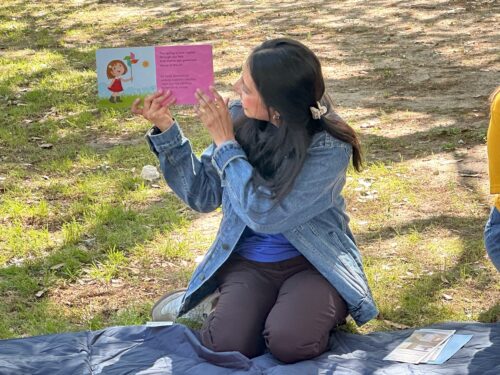
Children make deeper connections when adults pause during reading

Once you’re in the middle of the story, take a moment to stop and share your thinking out loud. A simple sentence like, “This part of the book makes me think about…” gives your child a window into how readers connect new information to things they already know.

This is the heart of comprehension.
You’re showing them that reading is more than decoding words. It’s connecting ideas, comparing experiences, and building mental pictures.

Children remember stories better when adults reflect after reading

At the end of the book, close your time together with, “My favorite part of the book was…”
This helps your child build recall skills, summarize ideas, and express opinions. It also gives you a chance to talk together about feelings, characters, or events in a way that supports emotional development.

Many families in Houston tell us that this final prompt becomes their child’s favorite part of reading. Kids love sharing what they enjoyed or didn’t enjoy, and those conversations strengthen confidence and language skills.

Collaborative for Children Empowers Families to Build Reading Readiness at Home

Why these three prompts matter for early childhood development

These “before, during, and after” questions may feel small, but they mirror key strategies used by experienced early childhood educators. When you think out loud, your child sees what good readers do: wonder, connect, question, remember, and reflect. Over time, these skills help with reading comprehension, writing, problem solving, and even social-emotional development.

At Collaborative for Children, we use these same practices across our early learning programs because they support children at every stage of development, from toddlers to kindergarten readiness.

How Collaborative for Children strengthens story time across Houston

Families in Greater Houston face many different challenges, and we work hard to make sure every child has access to high-quality early learning. In our Centers of Excellence, teachers combine these thinking‑aloud strategies with STEAM-rich activities, hands-on exploration, and certified early childhood curriculum. Children learn to make predictions during science activities, describe their thinking during math games, and share reflections after group time.

Parents often tell us these prompts carry over into home life. One Houston parent shared:

“I started using those three little questions every night before bed. My son now asks me what I think before we even open the book. It’s become our favorite part of the day.”

Read a Book Day Celebrates the Power of Early Literacy

How to practice this at home every day

You don’t need special training, expensive tools, or long lessons. Use these three sentences anytime you read:

Before: “I wonder what this book is going to be about.”
During: “This part makes me think about…”
After: “My favorite part was…”

Use them with picture books, library books, bedtime stories, or even the same book you’ve already read ten times. Repetition is great for young learners, and your voice is the best teaching tool they have.

Why this matters for Houston’s early childhood future

Strong readers don’t magically appear in kindergarten. They grow in homes where adults talk, wonder, connect, and share stories. These small moments are building blocks of school readiness, and they help close gaps that many children face before entering formal schooling.

That is why Collaborative for Children invests in high-quality training, certified curriculum, and early learning programs throughout Greater Houston. When families practice simple, research-informed strategies at home, and child care providers reinforce them in the classroom, children build the strong foundation they need to thrive.

Why Reading Bedtime Stories Is a Powerful Tool for Early Childhood Education

FAQ

How can I help my child understand stories better?
You can help your child understand stories by modeling your thinking out loud before, during, and after reading. These simple prompts show them how good readers make sense of a story.

Do I need special books or materials to build comprehension at home?
You don’t need anything special. Any book works, and young children actually benefit from hearing the same stories multiple times. The key is pausing to talk and think together.

Is this approach used in Collaborative for Children programs?
Yes. Our Centers of Excellence regularly use think‑aloud techniques, hands-on STEAM experiences, and conversation-rich activities that strengthen comprehension and school readiness.

Related News