
Spring Break Learning Adventures for Young Children | Collaborative for Children
×
User Search
Give
Give Newsletter Signup
3/6/2026

How Families Can Turn Spring Break into a Week of Learning Adventures

Articles Media

Spring break gives young children a welcome pause from routine, and for parents, it can be a chance to create meaningful learning moments at home. At Collaborative for Children, we see spring break as more than “time off.” It can be a powerful window for hands‑on discovery that supports early brain development, builds school readiness, and strengthens family relationships. When families in Greater Houston use this week to explore together, children return to child care or school refreshed, confident, and ready to learn.

Our Centers of Excellence routinely champion this idea. When children learn through play and exploration, they stay curious and engaged. Research continues to support the value of playful learning for early childhood growth, and Houston‑area data shows just how important early learning opportunities are for long‑term success and kindergarten readiness. Spring break is an ideal time to bring that knowledge home.

Below is a practical, parent‑friendly guide that turns a week at home into a set of simple, themed adventures. Each day focuses on hands‑on, STEAM‑inspired activities that nurture creativity, language, problem‑solving, and independence.

How Parents Support Early Learning During Spring Break

Parents are a child’s first and most important teachers. Even small moments at home can strengthen the skills children develop in high‑quality early childhood programs. When families set aside time to explore together, children build vocabulary, confidence, and adaptability. This aligns with how children learn best: through play, movement, and real‑world exploration.

Parents in Houston often tell us they want activities that are simple, low‑cost, and meaningful. The good news is that learning does not require special toys or expensive materials. With a little structure and a few minutes of daily intention, spring break can deliver the same benefits found in high‑quality, play‑based programs.

Nature Day invites curiosity and outdoor exploration

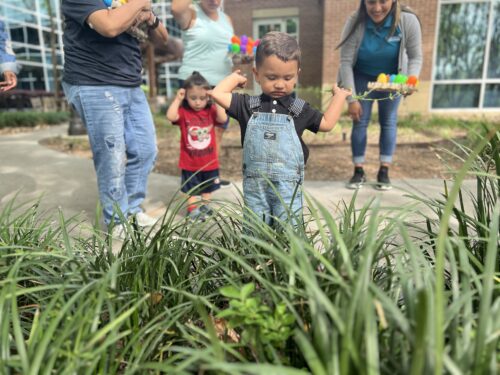
A nature‑focused day teaches children how to observe, ask questions, and make connections to the world around them. Whether you visit a neighborhood trail or simply walk through your backyard, children can practice early science skills by examining leaves, soil, rocks, flowers, and insects.

Try giving your child a plastic cup or egg carton to collect “nature treasures.” Talk about colors, textures, and shapes. Ask them what they notice, what they wonder about, and what looks different from winter. These conversations build language and background knowledge, both of which support early literacy.

Water Day helps children experiment and problem‑solve

Young children learn deeply when they explore concepts like sinking and floating, pouring and measuring, or how water changes shape depending on its container. Water Day activities are easy to set up using cups, bowls, measuring spoons, or recycled bottles.

Simple challenges like “What objects do you think will float?” or “How can we move water from one bowl to another without using our hands?” encourage early engineering thinking. Children practice prediction, reasoning, and decision‑making, all while playing in a low‑pressure environment.

At our Centers of Excellence, water play is a staple because it combines sensory learning with math and science skills. Parents can bring this same kind of learning home with just a few household items.

Art Day builds creativity and confidence

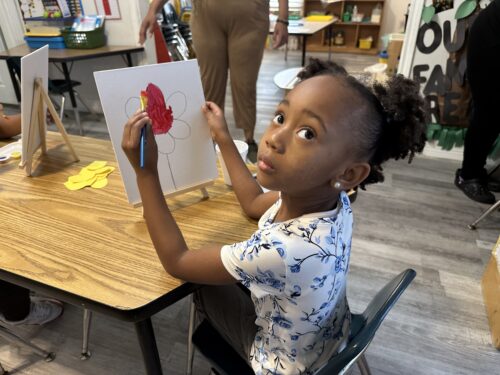
Art Day is a chance for children to express themselves and explore colors, shapes, and textures. Offering paint, crayons, chalk, or clay gives children a safe space to make choices, test ideas, and follow their imagination.

Parents do not need to focus on creating a “perfect” project. What matters is the process: mixing colors, making lines, and talking about what they see. These activities build fine motor skills essential for writing, and they help children feel proud of their creations.

A favorite activity among Houston families is taking art outdoors. Sidewalk chalk murals or painting with water on pavement help children feel free to create on a larger scale.

Music Day strengthens language and rhythm

Music Day supports listening skills, pattern recognition, and early math concepts. Families can make simple instruments such as shaker bottles, coffee‑can drums, or rubber‑band guitars. Singing familiar songs encourages language development and memory.

Invite your child to lead a “family band.” Switch roles so your child gets to be the conductor. This supports leadership, confidence, and collaboration. Many children naturally respond to rhythm, and incorporating movement helps strengthen balance and coordination.

Community Day helps children connect to the world around them

Spring break is a perfect time to explore local Houston resources. Visiting the library, attending a storytime, Discovery Green, Hermann Park, or walking through a farmer’s market helps children understand how communities work. Parents can point out helpers like librarians, firefighters, and store employees to build early social studies knowledge.

If a community outing is not possible, try a home version. Set up a pretend grocery store or post office. Let your child sort items, “ring up” purchases, or deliver pretend mail. Dramatic play nurtures problem‑solving and helps children act out real‑life scenarios in a safe, confident way.

Why these learning adventures matter for Greater Houston families

Houston families face unique challenges with access to early learning opportunities. Data from the region shows gaps in pre‑K participation and variation in kindergarten readiness across counties. Giving children playful, structured learning moments at home can help close those gaps.

Research continues to show that play supports brain development, strengthens language, and increases engagement in learning environments. When parents offer these experiences during spring break, children return to school or child care more confident, ready to participate, and excited to learn.

Collaborative for Children remains committed to providing Houston families with tools, training, and high‑quality early childhood programs, so every child has a clear path to success.

FAQs

What is the best way to keep young children learning during spring break?
The best way to keep young children learning is to give them simple, hands‑on activities that build curiosity and confidence.

How can parents support learning at home without buying new materials?
Parents can support learning using everyday household items like cups, bowls, paper, and recycled containers.

Do theme days really help children get ready for school?
Theme days support early language, math, science, and social skills, all of which contribute to school readiness.

Related News