
Houston Rodeo Family Guide: Play-Based STEAM and Early Learning Tips
×
User Search
Give
Give Newsletter Signup
2/5/2026

Houston Rodeo Family Guide: Turn Every Visit Into A Learning Adventure

Articles Media

Parents love the Houston Livestock Show and Rodeo because it is pure fun. Kids love it because there is so much to see, touch, and try. As Collaborative for Children, we see something else too. The Rodeo is one giant classroom where Greater Houston families can turn rides, livestock shows, music, and food into rich moments for language, science, and social growth. This guide shows you how to use a Rodeo visit to build skills at every age while keeping the day calm, safe, and memorable.

Parents Use the Rodeo to Build Brains Through Back-and-Forth Interaction

Children’s brains grow fastest in the early years. Simple, responsive back-and-forth moments with caring adults shape brain architecture and help children learn language and self control. Ask questions during the petting zoo. Narrate what you see in the ag exhibits. Pause and let your child reply. These ‘serve and return’ moments wire the brain for learning.

Reading signs together, naming animals, and describing smells (even the stinky ones) and sounds also feed early literacy. Pediatric experts recommend shared reading and conversation from birth because it strengthens language, relationships, and readiness. Use the arena program as a ‘book.’ Point to names, letters, and numbers. Let your child ‘read’ pictures back to you.

How Collaborative for Children Is Transforming Early Childhood Education in Greater Houston

Families Turn Livestock And Carnival Areas Into Play-Based STEAM Labs

Play is not extra. It is how young children learn. Guided play and hands-on exploration build math, science, language, and problem solving more effectively than drill. The Rodeo is perfect for this kind of learning because it is full of real objects, movement, and choice.

Try These Quick Play-Based STEAM Activities While You Walk


  • Measure and compare. Count fence posts between exhibits. Estimate which line is shorter and time the wait. Compare the height of a Ferris wheel to the arena seats and talk about ‘taller’ and ‘shorter.’ These small math chats build number sense.
  • Explore physics in motion. Before a gentle ride, predict what will move faster or slower and why. After the ride, ask what changed. That simple cycle of predict, test, and reflect mirrors scientific thinking for kids.
  • Study animal science up close. Observe a calf’s ears, hooves, or coat. Ask what each body part helps the animal do. Tie it back to your child’s world with ‘What helps you run or stay warm?’ Curiosity becomes vocabulary and knowledge.
  • Listen like sound engineers. During sound checks or music, cover one ear, then the other. Notice how the sound changes. Talk about speakers and microphones. You are doing early acoustics in kid-friendly language.

Toddlers Learn With Simple Rodeo STEAM Activities

Toddlers learn best through short, sensory-rich moments that let them move, touch, and talk. The activities below use everyday items and Rodeo sights to spark early science, math, engineering, art, and music. Each activity keeps language simple and invites your child to lead.

Little Engineers Rodeo Ramp

  • Bring a small toy animal or car. Find a low curb, a folded jacket, or a grassy slope and make a gentle ramp. Let your toddler roll the toy down and tell you if it went fast or slow. Try lifting the ramp a little higher and notice the change.
  • Steps: Place toy at the top. Count 1-2-3 and let go. Ask fast or slow. Raise the ramp and repeat.

Pattern Hunt Around The Grounds

  • Look for repeating shapes in fences, seat rows, bandanas, or signs. Say, ‘I see circle, square, circle, square. Can you find another square?’ Name the pattern and celebrate finds.

Rodeo Sound Hunt

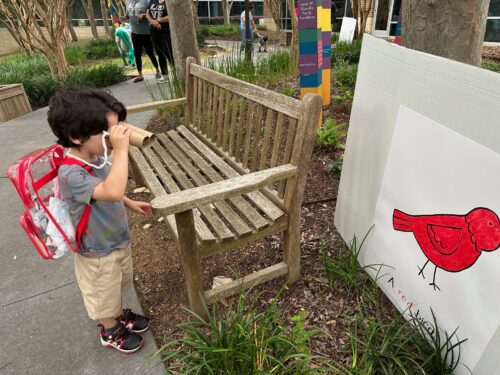
  • Crouch in a quieter walkway and cup your hands to your ears. Ask, ‘Do you hear animals, music, or people talking?’ Use words like loud, soft, near, and far.

Touch-And-Tell Texture Tour

  • Let toddlers gently touch safe textures like hay, grass, wood rails, or their own shirt. Ask, ‘Is it rough or smooth, hard or soft?’ Add one new word like bumpy or silky.

Which Weighs More

  • Hand your child a boot and a full water bottle one at a time. Ask which feels heavier. Then switch hands and ask again. Explain heavier and lighter in simple terms.

Animal Movers

  • Pick an animal you see or talk about. Walk like a cow, hop like a bunny, and add a quick freeze to practice control.

Bubble Physics

  • Blow bubbles while waiting in line. Ask about shape and whether bubbles float up or down. Try gentle and stronger blows to compare speed.

Shadow Play

  • On a sunny walkway, point to your child’s shadow. Wave, jump, and make the shadow copy you. Use words like big and small.

Mini Math Snack Sort

  • Sort snack pieces by shape, size, or color. Count each group and say which has more or fewer. Mix and sort a new way.

Stack The Rodeo Cups

  • Save paper cups, stack into a small tower, tap gently, and rebuild to explore balance and stability.


Parents Plan For Sensory Needs And Smooth Routines

Big events can be loud and bright. Bring comfort tools like headphones, a small fidget, or a soft hat. Show pictures of what you will see before you go and outline a simple schedule. Protect sleep and hydration to support attention and behavior throughout the day.

Families Use Rodeo Traditions To Grow Identity And Belonging

Children learn who they are through shared traditions. Name your family’s Rodeo traditions and talk about the people and values you celebrate. These conversations build language, identity, and a sense of belonging that support school success.

Provide A Houston Rodeo Learning Checklist

Before You Go

  • Read about animals you hope to see. Pick two new words to listen for at the Rodeo.
  • Practice serve and return with simple questions about Rodeo pictures.
  • Pack headphones, small notebook, crayons, water, and a healthy snack.

While You Explore

  • Use five senses and add one new descriptive word.
  • Count steps, goats in a pen, and stars on signs.
  • Pause for deep breaths and a quick stretch between activities.

After You Return Home

  • Make a mini book of your visit and dictate sentences for each page.
  • Do a kitchen STEAM follow-up like a paper cup chute or straw rocket.
  • Keep bedtime steady so the brain processes the day’s learning.

Collaborative For Children Supports Families And Providers Across Greater Houston

We partner with parents, educators, and child care leaders to make every day a learning day, Rodeo season included. Our Centers of Excellence bring certified ECE training, coaching, and observation-based curriculum into classrooms so children experience hands-on play, early literacy, and STEAM every week. We also support families with at-home guides and coaching on routines that stick.

“Our team helps parents turn busy community events into bite-size learning. When families slow down to talk, count, and wonder together, children soak it up. The Rodeo is not only a memory. It is a lesson plan that kids never forget.” — Collaborative for Children, Centers of Excellence Specialist

FAQs

What age is best for a first Rodeo visit?
Toddlers and preschoolers can enjoy the sights and animals with short visits, while early elementary children can stay longer if you build in quiet breaks and keep sleep on track. Younger children need 10 to 13 hours of sleep in 24 hours, so plan earlier daytime visits to protect.

How do I support my neurodivergent child at a large event?
You support neurodivergent children by previewing the day with pictures, using simple schedules, bringing sensory tools, and planning quiet breaks in low‑stim areas. These steps mirror national family engagement practices that honor each child’s needs.

How is a Centers of Excellence classroom different from drop‑in care?
A Centers of Excellence classroom uses certified ECE training, play‑based curriculum, and strong family partnerships so children experience intentional language, STEAM, and social‑emotional learning every day, which research links to better outcomes than passive care.

Related News