

What Your Child's Teacher Wishes You Knew | Parent Tips for School Success
×
User Search
Give
Give Newsletter Signup
9/2/2026

What Your Child’s Teacher Wishes You Knew

Articles Media

Every parent wants their child to succeed in school. Every teacher wants that too. While families and educators may approach learning from different perspectives, they share the same goal: helping children grow into confident, capable learners.

At Collaborative for Children, we work alongside families, educators, and child care providers across Greater Houston every day. Through our Centers of Excellence, family engagement programs, and educator support initiatives, we’ve seen firsthand how strong partnerships between parents and teachers can improve children’s outcomes long before they enter kindergarten.

In fact, the U.S. Department of Education consistently identifies family engagement as one of the most important factors in a child’s academic success. Children perform better when educators and families communicate regularly, share information, and work together to support learning.
Parents And Teachers Work Best as A Team

One of the strongest themes that emerges from educators is simple: children succeed when adults work together.

Teachers spend hours each day helping children learn, develop friendships, build confidence, and navigate challenges. Parents know their children better than anyone else. When those two perspectives come together, children benefit.

Many teachers say they wish parents would approach concerns with curiosity and partnership. Small misunderstandings can often be resolved through a conversation before they become larger issues. Open, respectful communication helps everyone stay focused on what matters most: the child.

For young children especially, consistency between home and the classroom creates a stronger learning experience. Children feel more secure when parents and teachers send similar messages about behavior, routines, and expectations.

Overheard Praise Helps Children See Themselves Differently

Reading At Home Builds Skills That Last a Lifetime

If there is one habit teachers consistently recommend, it is reading.

Research has repeatedly shown that reading aloud supports vocabulary growth, language development, listening comprehension, and future literacy skills. We encourage parents to begin reading with children early and continue making reading part of family life throughout childhood.

Teachers often emphasize that motivation to read matters just as much as learning to read. When children see books as enjoyable rather than a chore, they are more likely to become lifelong readers.

Parents do not need to be reading experts to make a difference. A few simple actions can help:

  • Read together every day.
  • Let children choose books that interest them.
  • Ask questions about the story.
  • Encourage children to tell you what they think will happen next.
  • Visit libraries regularly.

At Collaborative for Children’s Centers of Excellence, literacy development is woven throughout hands-on learning experiences that encourage children to explore, communicate, and build critical thinking skills.

Children Bring Their Whole Lives into The Classroom

One of the most valuable things parents can do is keep teachers informed.

Major life events often affect a child’s behavior, emotions, and ability to focus. A move, illness, family change, loss of a loved one, new sibling, or stressful experience can impact how a child responds in the classroom.

Teachers are not asking families to share every detail. They simply need enough information to better understand and support the child. As Houston Family Magazine noted in interviews with educators, even information about how a child responds to corrections or major life events can help teachers provide better support.

This is especially important during the early childhood years when children may not yet have the language skills necessary to fully explain their feelings.

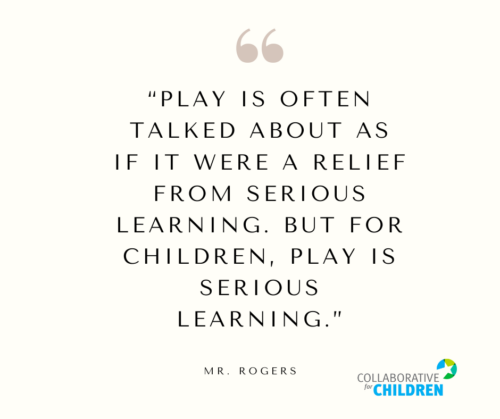
Play is Serious Learning

Sometimes parents worry if their young child seems to spend more time playing than completing traditional academic tasks.

High-quality early childhood education uses purposeful play to build essential skills. Through play, children practice communication, collaboration, problem-solving, creativity, and self-regulation.

That is why Collaborative for Children promotes STEAM-focused, hands-on learning experiences that allow children to investigate, explore, create, and learn through meaningful experiences. These approaches help children develop skills that support success in kindergarten and beyond.

Play-based learning supports cognitive, social, emotional, and language development while helping children stay engaged in the learning process.

School Readiness Begins Long Before Kindergarten

Many families assume kindergarten readiness starts a few months before school begins.

It starts years earlier.

Children build school readiness through everyday interactions with caring adults, rich language experiences, opportunities to explore, and consistent learning environments.

This is why Collaborative for Children supports children through a comprehensive approach that includes:

  • Family engagement
  • Instructional support for educators
  • Business development support for child care providers

When families, teachers, and child care centers all work together, children benefit from stronger and more consistent learning experiences.

The results are encouraging. Across Collaborative for Children’s Centers of Excellence:

  • 89% of teachers improved their command of early education competencies.
  • 95% of children demonstrated positive gains in at least one school-readiness skill.
  • Kindergarten-bound children tripled their command of essential kindergarten-readiness skills.
  • 85% of children performed in the top tiers of social-emotional school readiness assessments.

These outcomes reflect the value of investing in both educators and the environments where children learn.

Quality Early Learning Goes Beyond Child Care

Not all child care experiences are the same.

Families often tell us they are looking for more than supervision. They want environments where children are actively learning, building relationships, and developing the skills needed for lifelong success.

That is one of the reasons Collaborative for Children’s Centers of Excellence focus on quality standards, educator coaching, continuous improvement, family engagement, and school readiness outcomes.

A high-quality early learning environment includes:

  • Trained educators
  • Research-based curriculum
  • Developmentally appropriate learning activities
  • Family partnerships
  • Safe, nurturing environments
  • Ongoing assessment and improvement

These characteristics help differentiate high-quality early learning centers from facilities that primarily focus on custodial care.

What Parents Can Do Starting Today

The good news is that supporting your child’s teacher does not require extra training or expensive resources.

Start with these simple steps:

  • Read with your child every day.
  • Keep communication open with your child’s teacher.
  • Share important life changes that may affect your child.
  • Encourage effort rather than perfection.
  • Support attendance and consistent routines.
  • Make learning part of everyday experiences.
  • Ask your child questions about what they learned each day.

Small actions taken consistently often have the greatest impact.

Five Basic Needs Every Young Child Must Have to Succeed in School

Frequently Asked Questions

How can parents build a better relationship with their child’s teacher?

The best way is through regular, respectful communication. Share important information, ask questions early, and approach concerns as opportunities to work together.

Why is family engagement important in early childhood education?

Family engagement helps create consistency between home and school. Research shows that children benefit academically, socially, and emotionally when families actively participate in their learning.

What should parents look for in a high-quality child care program?

Look for trained educators, developmentally appropriate curriculum, strong family communication, safe learning environments, and a focus on school readiness and child development.

Related News