

Toy Rotation for Focused Play at Home | Collaborative for Children Houston
×
User Search
Give
Give Newsletter Signup
3/17/2026

Toy Rotation Helps Children Focus, Play Longer, And Learn More at Home

Articles Media

Why Fewer Toys Often Lead to Better Play

If you’ve ever watched a child bounce from toy to toy without really settling into any of them, you’re not alone. Many Houston families feel overwhelmed by toy clutter, yet still hear, “I’m bored.” The problem usually isn’t a lack of toys. It’s too many choices competing for a young child’s attention.

Toy rotation is a simple, research‑aligned practice that limits the number of toys available at one time while storing the rest out of sight. Families rotate toys on a predictable schedule, making old toys feel new again. What looks like an organizing trick is actually a powerful learning strategy that supports focus, creativity, and self‑regulation.

At Collaborative for Children, we see this same principle used every day in high‑quality early learning environments across Greater Houston.
How Toy Rotation Supports Brain Development

Young children are still developing executive function skills. These are the mental skills that help children focus, remember steps, control impulses, and stick with a task. When a play space is cluttered, children are pulled in too many directions at once, which can shorten attention spans and increase frustration.

A calmer, simpler play environment helps children do the opposite. With fewer toys available, children tend to play longer, explore more deeply, and use imagination instead of constantly switching activities. This kind of focused play is directly connected to school readiness and emotional development.

This is why play‑based early childhood education does not overwhelm children with constant novelty. Instead, it carefully curates materials to protect attention and encourage meaningful learning.

What Toy Rotation Looks Like in Real Homes

Toy rotation does not require special shelves, color‑coded bins, or a perfectly organized house. Families can start with what they already have.

Most parents begin by gathering toys from shared spaces and removing anything broken, unsafe, or no longer age‑appropriate. From there, toys are grouped loosely by type, such as building toys, pretend play, puzzles, art materials, and movement toys.

Parents then create a few balanced toy sets and place only one set in the play area at a time. The rest are stored out of sight but easy to access. Every one to three weeks, the toys are swapped. Children often react as if they’ve received brand‑new toys, even though nothing new was purchased.

Families across Houston tell us that clean‑up becomes easier, play becomes calmer, and they feel less pressure to buy more toys.

How Play-Based Parenting Transforms Everyday Routines

Why Educators Use the Same Strategy in Centers Of Excellence

Toy rotation is not just a home strategy. It’s a standard practice in high‑quality early childhood classrooms.

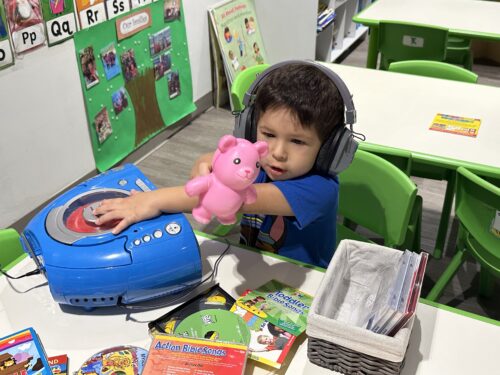
In Collaborative for Children’s Centers of Excellence, educators intentionally rotate materials in learning centers like blocks, dramatic play, and STEAM exploration. Teachers observe how children engage, then refresh materials to extend learning instead of overwhelm it.

This approach supports hands‑on, play‑based learning while keeping classrooms organized and purposeful. It also allows educators to align materials with learning goals in literacy, math, and social‑emotional development.

What families practice at home through toy rotation mirrors what children experience in certified early learning environments.

How Parents Can Start This Weekend

Parents do not need to do everything at once. A simple start makes the habit sustainable.

Begin with one play area, not the entire house. Choose a small number of toys that encourage open‑ended play. Store the rest. Observe what your child gravitates toward. Adjust as needed.

Pair toy rotation with daily playtime. Sit on the floor. Narrate what your child is building. Ask open‑ended questions. These moments build language, connection, and confidence far more than adding new toys ever could.

What Kids Learn From Collections and Why It Matters for Early Childhood Education in Houston

How Collaborative for Children Supports Learning at Home

Collaborative for Children believes learning does not stop at the classroom door. Parents are a child’s first teacher, and everyday routines are powerful learning opportunities.

Through our Centers of Excellence, certified ECE training, family resources, and hands‑on STEAM experiences, we help families and educators create environments that support focus, curiosity, and growth.

Toy rotation is one small example of how intentional design can make learning easier and more joyful for young children.

Take the Next Step in Greater Houston

  • Parents can explore our family resources to find play‑based strategies that support learning at home.
  • Families looking for high‑quality early education can use our tools to find a nearby Center of Excellence.
  • Educators and child care providers can learn how coaching and certified curriculum support intentional classroom design.
Resources for families

FAQs

Does toy rotation mean my child has fewer toys overall?
No, toy rotation simply limits how many toys are available at one time, which helps children focus and play more deeply.

How often should toys be rotated?
Most families rotate toys every one to three weeks, but the best schedule is the one you can maintain consistently.

Is toy rotation better than buying educational toys?
Yes, because focused, open‑ended play with familiar materials supports learning more effectively than constantly introducing new toys.

Related News