5 Skills That Matter Most for Kindergarten Success
×
User Search
Give
Give Newsletter Signup
10/26/2026

Five Things That Matter Most for Kindergarten Success

Articles Media

When families think about kindergarten readiness, they often picture letters, numbers, sight words, and handwriting practice. Those skills matter. Early literacy and math provide an important foundation for classroom learning, and parents should continue reading, counting, singing, playing, and exploring with their children.

But school readiness is bigger than academics.

A child also needs to manage frustration, follow routines, take turns, ask for help, work with other children, and return to a task after something goes wrong. Research describes self-regulation as a foundation that helps children participate in learning and adjust to school. It does not replace early literacy or math. It helps children use those academic skills in a classroom setting. (Read the research review on school readiness and self-regulation).

At Collaborative for Children, we see kindergarten readiness taking shape in ordinary moments throughout Greater Houston. It happens when a child waits for a turn, calms down with help, puts on their own shoes, listens to a story, solves a problem during play, or says, “I need help.”

These moments may not look like formal instruction, but they prepare children to enter a classroom ready to participate, connect, and learn.
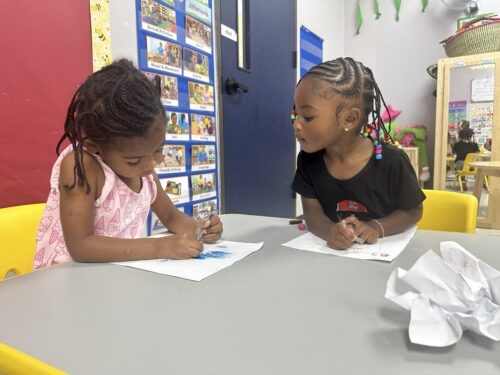
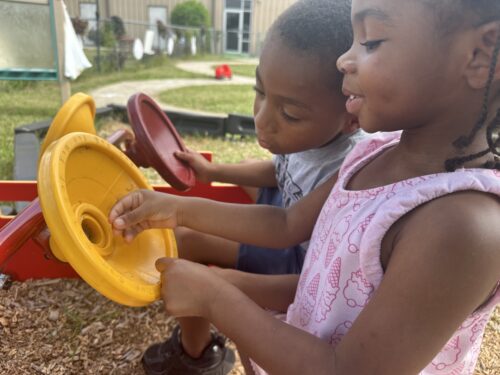
1. Self-Regulation Helps Children Access Academic Learning

Self-regulation is the ability to manage emotions, thoughts, attention, and behavior in ways that support a goal. For a kindergartner, that might mean waiting for a turn, keeping their hands to themselves, listening during a story, or trying again after a block tower falls.

A child does not need perfect emotional control before starting school. Five-year-olds still become frustrated, cry, interrupt, and need adult support. Kindergarten readiness is not the absence of big emotions. It is the developing ability to recognize those feelings, accept guidance, recover, and rejoin the activity.

A major research review describes self-regulation as a foundation for engagement in learning and adjustment to school. A separate study of 932 preschool children found that overall self-regulation and executive function predicted pre-academic and social-emotional skills, while emotion regulation predicted social-emotional competence. These findings support a whole-child view of readiness in which regulation and academics strengthen one another. (Read the preschool self-regulation study).

The strongest evidence does not support saying emotional regulation simply “matters more” than every academic skill in every circumstance. Reading, language, math, social skills, and self-regulation all contribute to school success. A more accurate conclusion is that regulation helps children engage with instruction, relationships, and classroom routines, allowing academic learning to happen.

Families Build Self-Regulation Through Everyday Practice

Parents can support these skills without creating formal lessons. Board games teach children to wait and follow rules. Helping prepare dinner requires listening and completing steps. Cleaning up toys gives children practice moving from a preferred activity to a responsibility.

When a child becomes upset, begin with connection rather than a lecture. You might say, “You wanted another turn, and you are disappointed. Let’s take a breath, then we can decide what to do.” The adult is not removing the boundary. The adult is helping the child regain enough control to respond to it.

Families can also practice asking for help. If your child cannot open a container, find a missing shoe, or complete a puzzle, pause before solving it. Ask, “What could you try?” or “Who could help you?” Children become more capable when they have safe opportunities to struggle, think, communicate, and try again.

2. Calm and Predictable Goodbyes Help Children Enter the Classroom

School drop-off can be emotional for both children and parents. A child may cling, cry, become quiet, or repeatedly ask when the caregiver will return. These responses do not automatically mean the child is unprepared for school. Separation can be difficult even when a child enjoys the classroom and trusts the teacher.

Parents often hear claims that one stressful morning will affect a child for hours. We could not verify that exact claim as a general rule, and families should not feel that an imperfect morning has ruined the school day. Children are adaptable, and skilled educators can help them settle after a difficult arrival.

What does help is a short, predictable goodbye. Before entering, get close to your child’s level and use the same simple message each day:

“I love you. You are safe. Your teacher will take care of you. I will be back after school.”

A familiar ritual might include one hug, one phrase, and a wave at the door. Keep it warm and confident. Avoid disappearing without saying goodbye, but also try not to restart the farewell several times after the teacher has begun the transition.

Our article Helping Your Child Start Kindergarten with Confidence encourages families to visit the school, learn the schedule, meet the teacher when possible, and explain who will pick the child up. These steps reduce uncertainty by helping children understand what will happen before, during, and after the school day.

Families and Teachers Can Build a Shared Drop-Off Plan

If drop-off is consistently difficult, ask the teacher what happens after you leave. Some children cry briefly and quickly become involved in play. Others may need a specific transition plan, a familiar classroom job, a visual schedule, or support from the same staff member each morning.

Parents can share what helps the child at home, while educators can explain what they observe in the classroom. The goal is not proving whether the child “should” be upset. It is creating a predictable handoff that all adults follow.

Persistent or intense distress deserves attention. Contact the child’s teacher, school counselor, pediatrician, or another qualified professional if separation anxiety regularly prevents attendance, continues to worsen, causes repeated physical complaints, or significantly interferes with daily life.

3. Consistent Morning Routines Reduce Unnecessary Stress

A calm school morning usually begins the night before.

Parents cannot control traffic, spilled milk, lost shoes, or every unexpected meltdown. They can reduce the number of decisions and searches packed into the busiest part of the day. Predictability gives children fewer surprises to manage before they enter the classroom.

Before bed, families can:

  • Lay out clothes and shoes.
  • Pack the backpack and place it near the door.
  • Prepare lunch and fill the water bottle.
  • Check for school papers or special activity items.
  • Decide what breakfast will be.
  • Review the next day’s schedule.
  • Establish a regular wake-up time.


Young children can take part. A preschooler might choose between two outfits, place a folder in the backpack, or set shoes beside the door. These jobs build independence while making the next morning easier.

Try using a short visual schedule with pictures showing the order of the morning: wake up, use the bathroom, get dressed, eat breakfast, brush teeth, collect the backpack, and leave. Visual supports can be especially useful for children who benefit from seeing what comes next rather than hearing repeated verbal reminders.

If the morning becomes tense anyway, repair matters more than perfection. A parent can say, “We were both frustrated this morning. I love you, and we can try again after school.” Children learn from seeing adults calm down, take responsibility, and reconnect.

4. Healthy Sleep Supports Attention, Behavior, and Learning

A workbook cannot make up for a child who is consistently too tired to engage.

Sleep supports attention, memory, behavior, learning, and emotional regulation. The American Academy of Sleep Medicine recommends that children ages 3 to 5 receive 10 to 13 hours of sleep per 24 hours, including naps. Children ages 6 to 12 should receive 9 to 12 hours. These recommendations are endorsed by the American Academy of Pediatrics. (See the child sleep recommendations).

Regularly receiving the recommended amount of sleep is associated with better attention, behavior, learning, memory, and emotional regulation. Sleeping less than recommended is associated with attention, behavior, and learning problems.

Families Can Work Backward From the Morning Wake-Up Time

If a five-year-old needs to wake at 6:30 a.m., parents can work backward from that time and account for the child’s total sleep needs, including any nap. Bedtime means the time the child is likely to be asleep, not merely when the routine begins.

A predictable wind-down routine can include:

  1. Turning off screens.
  2. Taking a bath or washing up.
  3. Putting on pajamas.
  4. Brushing teeth.
  5. Reading or singing together.
  6. Dimming the lights.
  7. Going to sleep at a consistent time.

The American Academy of Sleep Medicine recommends a relaxing, consistent routine and advises families to turn off children’s electronic devices one hour before bed.

An earlier bedtime is not a cure for every behavior or school challenge. If a child snores frequently, struggles to fall asleep, repeatedly wakes during the night, or remains very tired despite adequate time in bed, families should discuss those patterns with the child’s pediatrician.

5. Respectful Family-School Partnerships Show Children How Adults Work Together

Children notice how the adults in their lives speak about one another.

They hear the comment made about the teacher in the car. They notice the tone used with the front office. They listen when a parent discusses a classroom rule, report card, or behavioral concern. These moments help shape the child’s understanding of trust, conflict, authority, and problem-solving.

Respectful communication does not mean agreeing with every school decision. Parents should ask questions, raise concerns, request support, and advocate firmly when a child’s needs are not being met. The difference lies in approaching the conversation with facts, curiosity, and a focus on solutions.

Instead of opening with, “Why would the teacher do this?” a parent might ask:

  • “Can you help me understand what happened?”
  • “What have you noticed in the classroom?”
  • “What does my child say or do before the problem begins?”
  • “What strategies have helped at school?”
  • “What can we reinforce at home?”
  • “When should we check in again?”

Our article What Your Child’s Teacher Wishes You Knew explains how families and educators contribute different but valuable knowledge. Parents understand the child’s history, temperament, interests, and needs. Teachers see the child participating in a group, handling classroom routines, and responding to academic and social expectations. Children benefit when those perspectives work together.


If a concern affects safety, disability access, discrimination, or the child’s right to educational support, respectful communication should not become passive communication. Document the concern, contact the appropriate teacher or administrator, and follow the school or district process. Partnership includes accountability.

High-Quality Early Learning Prepares Children for the Whole Kindergarten Day

Kindergarten readiness should not be reduced to a checklist of academic facts. Children need early language and math experiences, but they also need practice working with others, following routines, communicating needs, managing frustration, and exploring ideas.

That whole-child approach guides our work across Collaborative for Children’s Centers of Excellence. These programs are designed to be high-quality early learning environments, not drop-in daycare facilities focused only on supervision. Educators receive support in early childhood development, developmentally appropriate curriculum, social-emotional learning, and hands-on STEAM instruction.

During a STEAM challenge, children may count materials, describe shapes, test a design, share tools, wait for a turn, and revise an idea that did not work. Academics and self-regulation are not competing priorities in that experience. They develop together.

This is why the distinction between “academic readiness” and “social-emotional readiness” can be misleading. A child needs language to ask for help, self-control to participate in a group, curiosity to explore an idea, and early academic knowledge to understand new concepts. Strong early learning supports all of those areas.

Across our Centers of Excellence, 89% of teachers improved their command of early education competencies, and 97% of enrolled children demonstrated positive gains in at least one school-readiness skill. These results reinforce the value of helping educators build both instructional skills and a deeper understanding of whole-child development.

Building Readiness Every Day

Parents do not need to recreate kindergarten at the kitchen table.

Reading together builds vocabulary, listening, and connection. A simple board game practices counting, turn-taking, and handling disappointment. Preparing breakfast provides opportunities to follow steps, compare quantities, and complete a family responsibility. A neighborhood walk encourages observation, conversation, and curiosity.

Even hard moments can help children prepare for school. A child who hears “no” and receives calm support is practicing disappointment. A child who spills a drink and helps clean it up is practicing responsibility. A child who struggles with shoes while an adult waits nearby is practicing persistence and independence.

Parents also need realistic expectations. A family can prepare clothes the night before and still have a chaotic morning. A child can sleep well and still struggle at school. A loving, consistent parent can follow every recommendation and still need help from educators, pediatricians, counselors, or specialists.

School readiness is not a test of whether a family has done everything perfectly. It is a developmental process shaped by the child, family relationships, early learning experiences, health, sleep, language, community, and access to support.

A Collaborative for Children Perspective

The strongest preparation for kindergarten is not found in one workbook, app, or summer program.

It is built through small, repeated experiences.

A child learns to regulate emotions when a calm adult helps them recover from disappointment. They learn trust through a predictable goodbye. They gain independence by packing part of their backpack. They arrive more ready to participate when sleep and morning routines meet their needs. They learn how adults solve problems by watching families and teachers communicate with respect.

Academic learning still matters. Read with your child. Count together. Talk about letters, sounds, shapes, patterns, and numbers. Follow your child’s questions and give them hands-on opportunities to explore.

But do not overlook the skills growing beside those early academic abilities. Asking for help, waiting, recovering, listening, working with others, and trying again are not extras. They are part of what allows children to enter a classroom and use everything they know.

The tired mornings matter. The lunch you packed matters. The bedtime story you almost skipped but read anyway matters. Your child’s readiness is being built in the small, daily moments when you show up, reconnect, and help them take the next step.

Frequently Asked Questions

What skills matter most for kindergarten readiness?

Kindergarten readiness includes self-regulation, social-emotional development, language, early literacy, early math, communication, physical development, and the ability to participate in routines. Research supports treating these areas as connected rather than claiming that one category replaces all the others.

Does my child need to read before kindergarten?

No, children are not generally expected to be fluent readers before kindergarten, although early literacy experiences are valuable. Reading aloud, discussing stories, singing, rhyming, noticing print, and building vocabulary help prepare children for formal reading instruction.

How much sleep does a kindergartner need?

A 5-year-old generally needs 10 to 13 hours of sleep per 24 hours, including naps, while children ages 6 to 12 need 9 to 12 hours. The appropriate range depends on the child’s age, biology, health, and whether they still nap.

Related News